What makes a small business website effective?
An effective small business website clearly explains the offer, builds trust, loads quickly, works well on mobile, supports SEO, and gives visitors a clear next step.
Small Business Website Design
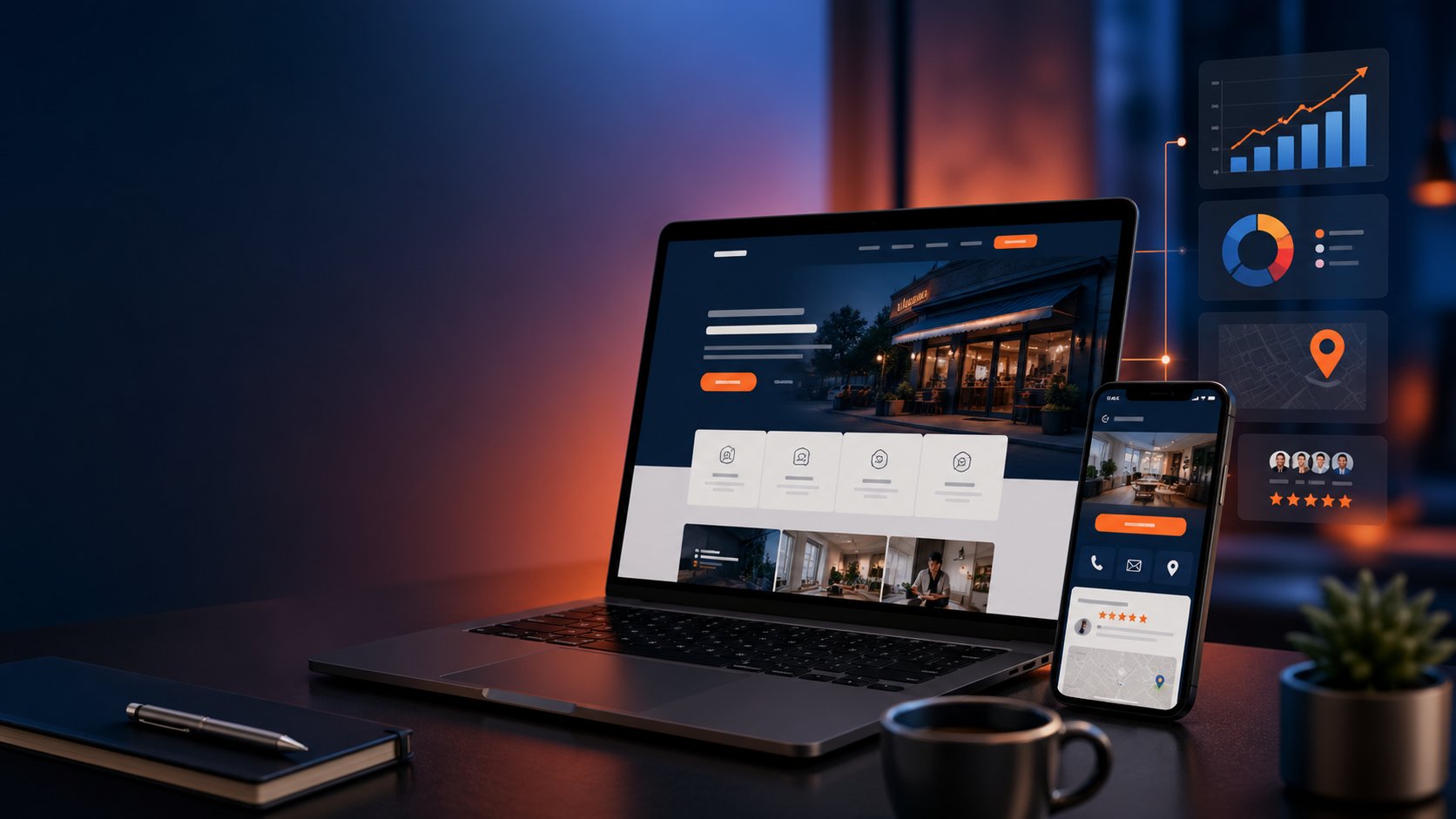
It should explain what you do, build trust quickly, make the next step obvious, and give search engines a clear understanding of your services.
For many businesses, the website is the first serious impression a customer gets. It is also one of the few digital assets you fully control, which means it should not sit online like a static brochure.
At SiteBuilder Design, we build websites as business systems. Performance, clarity, local visibility, conversion paths, analytics, and follow-up are planned from the beginning instead of being patched in after launch.
Every page should help visitors understand where they are, why they should care, and what to do next. That next step might be calling, requesting a quote, booking an appointment, visiting your location, buying a product, or joining your email list.
The path should be clear from the moment someone lands on the site. Strong small business website design usually includes:
The point is not to overwhelm people with options. The point is to help them understand your business quickly and give them a clear reason to act.
Visual design matters. A site should feel credible, current, and aligned with the business behind it. But a beautiful website that does not explain services, generate leads, or show up in search is still underperforming.
A stronger site has structure behind the visuals. Pages are organized around real services. Content matches what customers are searching for. Important information is easy to scan, and the page gives people enough confidence to keep moving.
For local businesses, that structure matters even more. Search engines need to understand what you do, where you do it, and who you serve. Your website should support your Google Business Profile, reinforce your location and service area, and make your business easier to find when people are ready to hire or buy.
Most customers will see your website on a phone before they ever see it on a desktop.
That makes mobile design more than a technical requirement. Your site should load quickly, display cleanly, and make actions like calling, emailing, navigating, or submitting a form simple on a small screen.
Mobile usability also affects trust. If a customer has to pinch, zoom, wait, or hunt for basic information, they are much more likely to leave before they ever understand why your business is the right choice.
A website should guide people from interest to action.
That does not mean every site needs to feel aggressive or sales-heavy. It means each page should have a purpose. A homepage introduces the business. A service page explains an offer in detail. A contact page removes friction. A landing page focuses on one campaign, service, or audience.
When those pages work together, the website becomes more than a collection of content. It becomes a system for turning visitors into leads, customers, subscribers, or clients.
Good website content should be easy for people to read and easy for search engines to understand. That starts with clear page titles, strong headings, organized sections, and service-specific content.
Instead of vague marketing copy, your site should answer the practical questions customers are already asking:
This type of structure improves the user experience while also helping your site appear for more relevant searches.
For small businesses, local relevance can be a major advantage.
Your website should clearly connect your services to the communities you serve. That may include city-specific service pages, locally relevant content, embedded maps, customer reviews, project examples, and consistent business information across the site.
When paired with a properly optimized Google Business Profile, your website can strengthen local search visibility and make your business easier to discover at the moment someone is ready to call, book, or buy.
A website should not be launched and forgotten.
Analytics show where visitors come from, which pages they view, what actions they take, and where opportunities may be missed. Contact forms, email capture, quote requests, booking tools, and CRM integrations help turn website activity into follow-up.
This is where many small business websites fall short. They may look fine, but they do not reveal what is working or create a reliable process for capturing leads.
A better website is built with that bigger picture in mind.
Your website should support your business every day.
It should help customers understand your value, make your services easier to find, improve your credibility, and create a smoother path from discovery to contact. When built correctly, it becomes one of the most useful assets your business owns.
SiteBuilder Design creates small business websites that combine design, strategy, search visibility, and conversion-focused structure. The result is a site that looks professional, loads quickly, supports your local presence, and gives visitors a clear reason to take the next step.
If your current website feels outdated, unclear, slow, or disconnected from how your business actually gets customers, it may be time for a better system.
SiteBuilder Design can help you plan, design, and launch a website that is built around your goals from the start.
Start a Website ProjectAn effective small business website clearly explains the offer, builds trust, loads quickly, works well on mobile, supports SEO, and gives visitors a clear next step.
Yes. A safe redesign needs redirect planning, metadata review, canonical URLs, internal links, sitemap updates, and preservation of important indexed content.
Yes. Lead capture, contact paths, quote requests, booking links, and follow-up systems are part of the strategy for service businesses that need measurable inquiries.
Compare starting points for modern small business website builds.
See how your website connects with search, social proof, and follow-up.
Prepare for the planning conversation before a redesign or new build.